The Social Jetlag Problem: Why Your Weekend Sleep Schedule Is Wrecking Your Recovery Score

TL;DR
Your Oura or Whoop recovery score is a single number that pretends your body runs on a 24-hour loop with no weekends. It does not. Social jetlag, the gap between your weekday alarm and your weekend sleep-in, shifts your circadian clock by one to two hours every single Friday night. Most wearables score Monday morning as poor recovery when the real problem is that their algorithm does not know what time your brain thinks it is.
What social jetlag actually is
In 2006, Till Roenneberg, a chronobiologist at Ludwig Maximilian University of Munich, published a paper that gave a name to something most people already felt. He called it social jetlag. The definition is simple: the difference between your biological clock (when you naturally fall asleep and wake up) and your social clock (when work or school forces you to). The measurement is just as simple. Take your mid-sleep time on a free day, subtract your mid-sleep time on a work day, and the absolute difference is your social jetlag. One hour of difference equals one hour of jetlag. Two hours equals a trip from London to Cairo, except you make that trip every single weekend and never adjust.
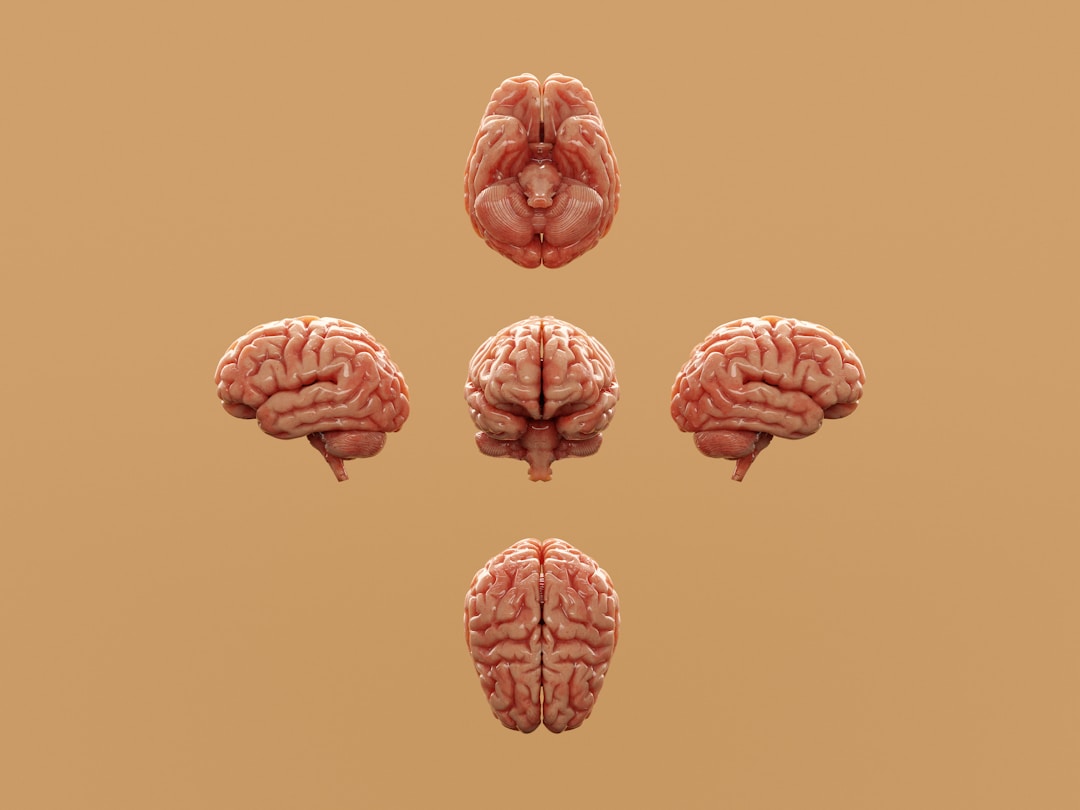
Roenneberg's original study, published in Current Biology, used data from over 500 central Europeans. The average social jetlag was 42 minutes. That does not sound like much until you realize that 42 minutes is the average, and the distribution has a long tail. About a third of the population had more than one hour. Teenagers and young adults were closer to two. The correlation with smoking, alcohol consumption, and obesity was not just statistically significant. It was clinically significant. People with more than two hours of social jetlag had a threefold higher risk of obesity in Roenneberg's later analyses. The mechanism is not mysterious. Your body is a system of clocks. The master clock sits in the suprachiasmatic nucleus of the hypothalamus and sets its phase from light. Peripheral clocks in your liver, your pancreas, your immune cells, and your adipose tissue set their phase from the master clock, but they do so at different speeds. When you sleep in on Sunday, your master clock shifts later. Your liver clock lags. Your pancreas is confused about when breakfast should arrive. By Monday morning, your body is running on three different time zones, and none of them match your alarm.
The effect is not just about sleep debt. Sleep debt is the hours you missed. Social jetlag is the hours you shifted. You can sleep ten hours on Sunday and still feel wrecked on Monday because your circadian phase is delayed. The ten hours fixed the debt. They did not fix the clock. This distinction matters because wearables treat sleep debt and circadian misalignment as the same problem, and they are not.
How it breaks your recovery score
Recovery scores, readiness scores, and body battery readings all rely on a few core inputs. Heart rate variability is the big one. Resting heart rate is another. Sleep duration and sleep stage distribution fill in the rest. The algorithm is proprietary for every company, but the published patents and research collaborations give us a decent outline. Oura's readiness score, for example, weights HRV trend heavily. Whoop's recovery score is almost entirely HRV-based. Garmin's body battery mixes HRV with stress estimates and activity load. The common thread is that every one of these numbers is timestamped in absolute clock time, not circadian time.
Here is what happens when you have social jetlag. On Friday night, you sleep from midnight to 8:00 AM. Your mid-sleep time is 4:00 AM. On Sunday night, you sleep from 1:00 AM to 9:00 AM because your circadian phase has shifted later from the weekend. Your mid-sleep time is 5:00 AM. Your social jetlag is one hour. On Monday morning, your alarm goes off at 6:30 AM. Your body thinks it is 5:30 AM on its internal clock. Your cortisol awakening response, the natural spike of stress hormone that wakes you up, is delayed. Your core body temperature is still in its nadir phase. Your HRV is suppressed because your autonomic nervous system is still in parasympathetic dominance. Your wearable measures your HRV at 6:30 AM and sees a number that is 15 to 25 percent lower than your personal baseline. It flags this as poor recovery. It tells you to take it easy. The problem is not that you recovered poorly. The problem is that your body is still on Sunday time and your watch is on Monday time.
The HRV suppression is real. In a 2019 study by Roeser et al., participants with experimentally induced circadian misalignment showed a mean HRV reduction of 18 percent during the forced-awake period. The reduction was concentrated in the hours when the body expected sleep. A smart ring that measures HRV during sleep or immediately on waking is measuring exactly during this window of expected sleep. The number is not a lie. It is a measurement taken at the wrong circadian address.
Resting heart rate is similarly affected. Circadian rhythm research shows that resting heart rate reaches its lowest point between 3:00 AM and 6:00 AM internal time. If your internal clock is shifted one hour later, your true resting heart rate occurs at 7:00 AM external time. Your wearable measures you at 6:30 AM and catches you on the downslope, not at the bottom. The number looks higher than baseline. Again, the algorithm reads this as poor recovery. Again, the algorithm is wrong about why.
Sleep stage scoring compounds the error. Most wearables use accelerometry and PPG-derived heart rate variability to estimate sleep stages. The algorithms are trained on polysomnography data collected in sleep labs, where participants go to bed at a fixed time and wake up at a fixed time. The training data assumes a stable circadian phase. When your circadian phase is delayed by two hours, your REM sleep is concentrated in the hours after your wearable thinks you should be awake. The algorithm sees reduced REM and flags it as a sleep quality problem. The REM is there. It is just shifted.

What current wearables do about it
The honest answer is almost nothing. I have read every patent and white paper I can find on this. Oura's readiness algorithm does not include a circadian phase estimator. Whoop's recovery score does not adjust for weekend sleep timing. Garmin's body battery does not model social jetlag. Apple Watch does not even have a recovery score. Fitbit's sleep score uses sleep duration and heart rate but does not adjust for phase shifts. The algorithms are all built on the assumption that you go to bed and wake up at the same time every day. That assumption is true for approximately zero percent of the working population.
Some apps offer Sleep Schedule features. Apple's is the most visible. You set a target bedtime and wake time, and the phone reminds you to go to bed. This is not circadian modeling. This is a calendar notification. It does not measure your actual phase. It does not adjust your recovery score based on your phase. It just tells you to be consistent, which is good advice but not a solution for people who work Monday to Friday and have lives on Saturday.
Oura does have a Circadian Alignment feature in its app. It tells you whether your light exposure, meal timing, and activity are aligned with your body's clock. The feature is useful but it is behavioral advice, not algorithmic correction. Your readiness score still tanks on Monday morning even if you followed every circadian alignment suggestion on Sunday. The score does not know that your internal midnight was at 1:30 AM external time. It just knows that your HRV was low at 6:30 AM.
The deeper issue is data architecture. To model social jetlag correctly, a wearable needs to store your sleep history, compute a running estimate of your circadian phase, and adjust every recovery metric by that phase offset. Oura and Whoop store this data in the cloud. They could do the computation. They do not. I suspect the reason is that the correction would make their scores less volatile, and volatile scores are more engaging. A user who sees their readiness drop from 85 to 62 on Monday morning opens the app more times than a user whose score stays flat because the algorithm understood their weekend shift. The business model is built on engagement, and engagement rewards drama.
How Pulsyn thinks about it
Pulsyn stores your data on your phone, not in our cloud. This is not a privacy feature. It is a compute feature. Because the data lives on the device, we can run models that would be expensive to run at scale for a million users in a data center. A circadian phase estimator is exactly that kind of model. It is not a large neural network. It is a small, iterative algorithm that updates a phase variable based on your recent sleep times, light exposure if you grant it, and your HRV trend. The computation is trivial for a modern phone. It is expensive for a cloud backend serving millions of users with real-time queries.
Our current prototype does not yet ship with a social jetlag correction. I am being direct about that because this post would be dishonest if I claimed otherwise. What we are building is a scoring system that has two modes. In baseline mode, the recovery score is computed the same way as everyone else: HRV, resting heart rate, sleep duration, weighted into a single number. In circadian-adjusted mode, the score is corrected by your estimated phase offset. If your circadian phase is delayed by 1.5 hours on Monday morning, the algorithm compares your Monday morning HRV not to your raw baseline, but to your baseline at the equivalent circadian time. The correction is not a hand-waving multiplier. It is a lookup from published circadian HRV curves. The curves are well established in the literature. HRV varies by 10 to 20 percent across the circadian cycle in healthy adults. The variation is sinusoidal and predictable. We can model it.
The reason this is hard is not the math. The math is undergraduate-level signal processing. The hard part is user trust. If your Oura score drops on Monday morning, you blame yourself. You think you drank too much or stayed up too late. If your Pulsyn score stays flat because the algorithm corrected for your circadian phase, you might blame the algorithm. You might think it is being too easy on you. This is a real product design problem. We are still debating whether the circadian-adjusted score should be the default or an opt-in toggle. I lean toward making it the default and explaining the correction transparently in the app. But I am not sure if that is the right call. The user testing will tell us.
What we do know is that the data model supports this. Your sleep history is stored in SQLCipher on your phone. We can query the last 30 days of sleep onset and offset times. We can fit a circadian phase estimator to that data. We can store the phase estimate in the same database. We can update it every morning. We can apply it to your recovery score before we render it. None of this requires a network round-trip. None of it requires your data to leave the device. This is the entire reason we built the architecture this way. The cloud is not a requirement for health analytics. It is a convenience for the company and a liability for the user.
What you can actually do
The product fix is months away. Here is what you can do now, whether you use Pulsyn, Oura, Whoop, or a 0 fitness band from Amazon.
Track your mid-sleep time. Pick a Tuesday or Wednesday, when your schedule is stable, and calculate the midpoint between when you fall asleep and when you wake up. Do the same for a Saturday or Sunday. The difference is your social jetlag. If it is under 30 minutes, you are fine. If it is 30 to 60 minutes, you are in the mild range. If it is over 60 minutes, you are in the range where the research shows measurable metabolic and cardiovascular effects. The relationship is dose-dependent. Two hours is worse than one.
Do not try to fix it by sleeping less on weekends. That is the worst possible response. Sleep deprivation plus circadian misalignment is worse than either alone. The fix is to shift your weekday schedule closer to your weekend schedule, or your weekend schedule closer to your weekday schedule. The former is usually impossible because work starts at a fixed time. The latter is unpopular because people want their weekends. A compromise is to limit the shift to under one hour. Go to bed at 11:30 PM on Friday instead of midnight. Wake up at 8:30 AM on Saturday instead of 9:30 AM. The one-hour reduction in social jetlag has a measurable effect on subjective sleepiness and objective performance in the lab studies.
Get light in your eyes on Monday morning. Bright light, preferably sunlight, within 30 minutes of waking advances your circadian clock. This is the fastest way to compress your social jetlag. Even 10 minutes of outdoor light helps. The mechanism is well understood. Light hits the intrinsically photosensitive retinal ganglion cells in your eye, which project directly to the suprachiasmatic nucleus. The signal tells your master clock that morning has arrived. The phase advance is immediate. Your HRV will still be suppressed on Monday morning, but it will recover faster by Tuesday if you get the light cue.
Ignore your recovery score on Monday. This is not a recommendation I can make as a product builder because it undermines the product. But as a human who wears a smart ring, I can tell you that Monday morning scores are noise. They are measuring your circadian phase, not your recovery. If you want to track recovery, look at Tuesday or Wednesday. If you want to track social jetlag, look at Monday. The number is real. It just means something different than the app says it means.
What we are still figuring out
I mentioned above that we are debating whether to make circadian adjustment the default. There is another debate that is even more unresolved. How should we score the weekend itself? If you sleep in on Saturday and your circadian phase shifts later, your Saturday night sleep is now misaligned with your Sunday alarm. The social jetlag is self-inflicted. Should the recovery score on Sunday morning reflect that you chose to shift your clock? Or should it be circadian-adjusted so that your Sunday morning score looks good even though you are setting yourself up for Monday misery?
There is a case for both. The honest case is that the Sunday morning score should be circadian-adjusted because you are recovered relative to your shifted phase. The tough-love case is that it should not be adjusted, because the shift is a choice and choices have consequences. Oura and Whoop effectively take the tough-love case by default. Their Sunday scores look fine. Their Monday scores look terrible. The user thinks they recovered well on Sunday and crashed on Monday. The reality is that they were misaligned on both days, but the misalignment only shows up when the alarm forces an early wake.
I do not know which approach is better for long-term behavior change. The honest score might make people feel better about Monday. The tough-love score might push people to keep a more consistent schedule. We will need to run this as an A/B test once we have enough users. I am genuinely uncertain about the right call. This is one of the places where building a health product is harder than building an accurate product. Accuracy is not the only goal. The score has to change behavior in a direction that makes people healthier. Sometimes that means being less than fully precise.
About the author
James Hoffmann is the founder of Pulsyn. He has been reading chronobiology papers since 2024, mostly because his own Monday morning HRV numbers stopped making sense and he wanted to know why.
References
Roenneberg, T., Kuehnle, T., Juda, M., Kantermann, T., Allebrandt, K., Gordijn, M., and Merrow, M. (2007). Epidemiology of the human circadian clock. Sleep Medicine Reviews, 11(6), 429-438. (Original social jetlag concept and population distribution.)
Roenneberg, T., Allebrandt, K. V., Merrow, M., and Vetter, C. (2012). Social jetlag and obesity. Current Biology, 22(10), 939-943. (Correlation between social jetlag > 2 hours and threefold obesity risk.)
Roeser, K., Schlarb, A. A., Kuster, A., and Kubler, A. (2019). Heart rate variability in the context of chronobiology: sleep, circadian misalignment, and ultradian rhythms. International Journal of Psychophysiology, 145, 32-39. (HRV reduction under circadian misalignment.)
Chua, E. C. P., Tan, W. Q., and Yeo, S. C. (2018). Heart rate variability in sleep and sleep disorders. Sleep Medicine Clinics, 13(3), 409-421. (Circadian variation in HRV across the 24-hour cycle.)
Eastman, C. I., and Burgess, H. J. (2009). How to travel the world without jet lag. Sleep Medicine Clinics, 4(2), 241-255. (Light therapy for phase advance, applicable to social jetlag.)
Oura Health Oy. Oura Ring: How Readiness is Calculated. Oura Help Center, 2025. (Description of HRV weighting and baseline calculation.)
Whoop, Inc. Understanding Recovery. Whoop Support, 2025. (Documentation of HRV-centric recovery scoring.)